When it comes to improving your home’s water quality, the terms water softener and water filter often get used interchangeably. But in actuality, they are very different systems designed to solve different water problems. Understanding the differences between a water softener vs water filter is the first step toward healthier, cleaner, and better-tasting water in your home.
At Rayne of the Wine Country, we offer a full range of residential water solutions — from water softeners to drinking water systems, water coolers, and chlorine removal systems — and we’re here to help you find the best option for your water quality needs.
What Is a Water Softener?
A water softener is a system designed to remove hard water minerals like calcium and magnesium from your household water supply. These minerals don’t pose serious health risks, but they do cause a range of everyday problems.
How a Water Softener Works
Water softeners use a process called ion exchange. Hard water enters the system and passes through a tank filled with resin beads that attract and hold calcium and magnesium ions, replacing them with sodium or potassium ions. The result? Soft water that protects your plumbing and appliances.
Benefits of a Water Softener
A water softener:
- Reduces scale buildup in pipes, water heaters, and appliances
- Extends the life of dishwashers, washing machines, and coffee makers
- Makes soap and detergents more effective
- Leaves skin and hair feeling softer after showers
- Reduces spots on glassware
In areas with hard water, a water softener can save you money on repairs and lower your energy bills by improving efficiency.
What Is a Water Filter?
A water filter is designed to remove contaminants from your water, such as sediment, chlorine, bad tastes, odors, and even certain chemicals or microbes — depending on the type of filtration media used.
How a Water Filter Works
Water filters use physical or chemical media (like activated carbon, ceramic, or reverse osmosis membranes) to trap or reduce contaminants as water flows through the system.
Different filters target different impurities:
- Sediment filters capture dirt and rust
- Carbon filters remove chlorine and improve taste and odor
- Reverse osmosis systems can reduce dissolved solids and a wide range of contaminants
Benefits of a Water Filter
- Cleaner, safer drinking water
- Improved water taste and smell
- Protection from specific contaminants (depending on the system)
- Enhanced water quality for cooking and beverages
Water filters can be installed at the point of entry (whole-house filters) or point of use (under-sink or countertop drinking water systems).
Related article: How to Find the Right Water Filter: Tailored Water Treatment Solutions for Your California Home
Water Softener vs Water Filter — Key Differences
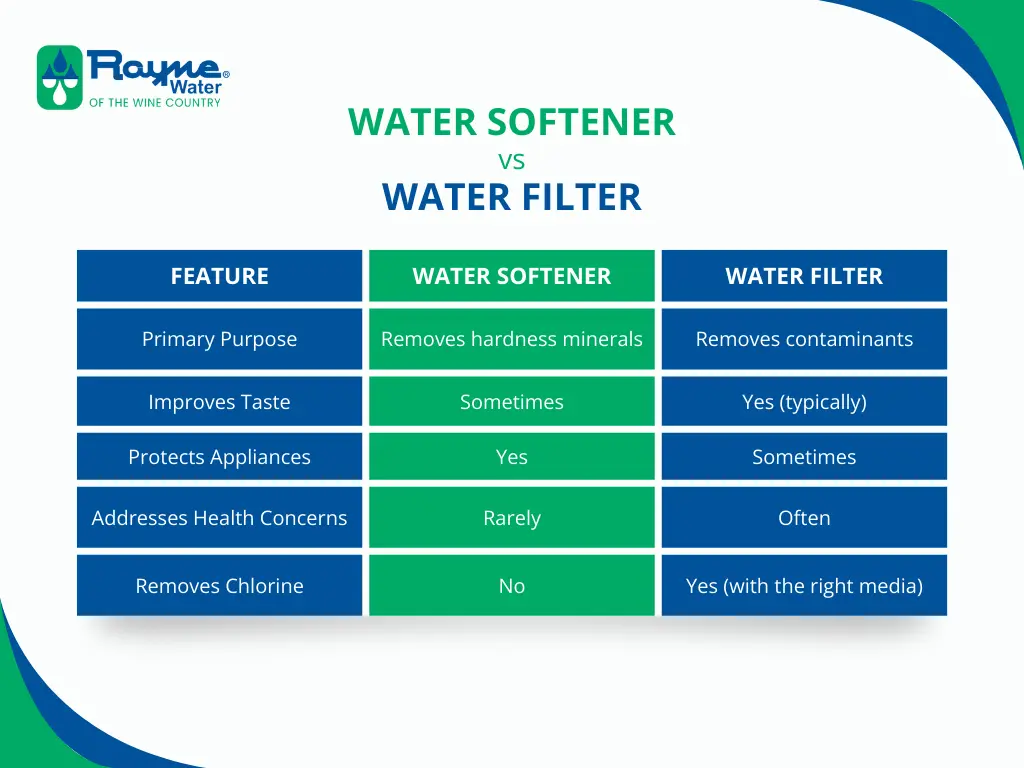
In summary:
- A water softener targets hardness — protecting pipes, fixtures, and appliances.
- A water filter targets contaminants — improving water safety, taste, and clarity.
Which One Do You Need — A Water Softener or Water Filter?
Choose a Water Softener If:
- You notice scale buildup on fixtures
- Your soap doesn’t lather well
- Your water leaves spots on dishes
- You want to prolong the life of appliances
Related article: Installing a Water Softener: Your Key to Better Water and Big Savings
Choose a Water Filter If:
- Your water tastes or smells unpleasant
- You want clean drinking water
- You’re concerned about chlorine, sediment, or specific contaminants
- You want better-tasting water for cooking and beverages
What If You Need Both — A Water Softener AND a Water Filter?
Many homes benefit from both systems! Hard water and contaminants can co-exist, and addressing both issues ensures:
✔ Softer water throughout the home
✔ Cleaner, better-tasting water where it matters most
For example, a whole-house water softener can protect your pipes and appliances, while a drinking water system under your sink or at your kitchen faucet can provide filtered drinking water free of chlorine and taste issues.
How to Decide Between a Water Softener vs Water Filter
In order to choose the right solution, follow these steps:
- Test your water quality – A professional water test reveals hardness levels and contaminants present in your water.
- Identify your goals – Are you trying to protect appliances, improve drinking water taste, or solve both problems?
- Talk to the experts – Our team at Rayne of the Wine Country can help you understand your water test results and recommend the best solution — or combination of systems — for your home.
Rayne of the Wine Country — Your Water Quality Experts
At Rayne of the Wine Country, we know that every home has unique water challenges. Whether you need:
- Residential water softeners
- Drinking water systems
- Water coolers
- Chlorine removal systems
—We have a solution to match your needs and budget.
Understanding the difference between a water softener vs water filter helps you make smart decisions about your home’s water quality. Softeners tackle hard water, filters handle contaminants, and often the best results come from using both. With expert guidance from Rayne of the Wine Country, you can enjoy water that’s not just soft, but clean, great-tasting, and safe as well.
Ready to improve your water? Contact us to explore your options and to get a personalized recommendation for the perfect system for your home.