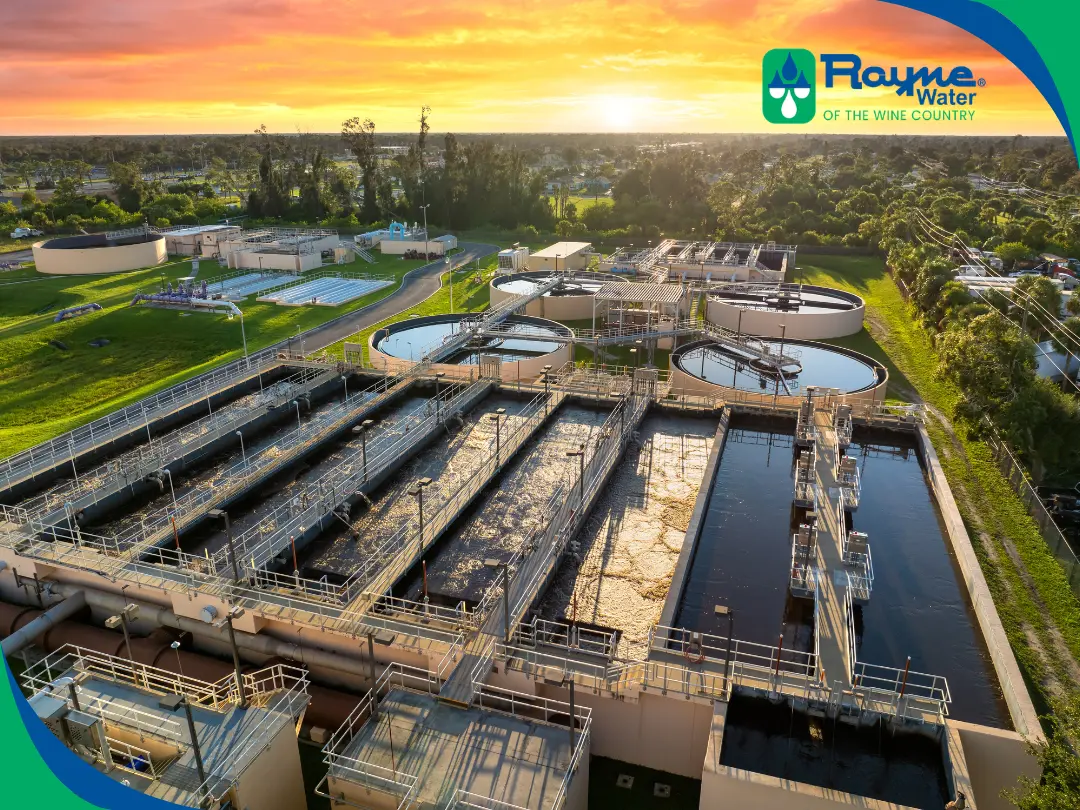
When you turn on the tap in Santa Rosa, Napa, Vallejo, Ukiah, or Lakeport, you expect the water to be completely clean and safe. After all, it comes from a local water treatment facility.
Local water utilities do a massive, commendable job of treating municipal water so that it meets basic federal safety standards. They clear out major pathogens, filter out heavy debris, and treat the supply to prevent immediate waterborne illnesses.
However, there is a major difference between water that is legally “safe” at a city treatment plant and water that is truly clean, healthy, and ideal for your family when it exits your kitchen faucet.
If you solely rely on city water treatment, your home is likely still exposed to a host of aesthetic, structural, and chemical water quality issues. Here is what is really happening to your municipal water supply across Napa, Lake, Sonoma, Solano, and Mendocino counties—and how you can fix it.
What Municipal Water Treatment Actually Does (and What It Misses)
To understand why your water still leaves white spots on dishes or tastes faintly like a swimming pool, it helps to look at what municipal water plants do.
City water facilities use chemicals to kill harmful biological contaminants like bacteria, viruses, and parasites. While this keeps you safe from acute illness, the treatment process introduces its own problems and leaves several issues completely unaddressed.
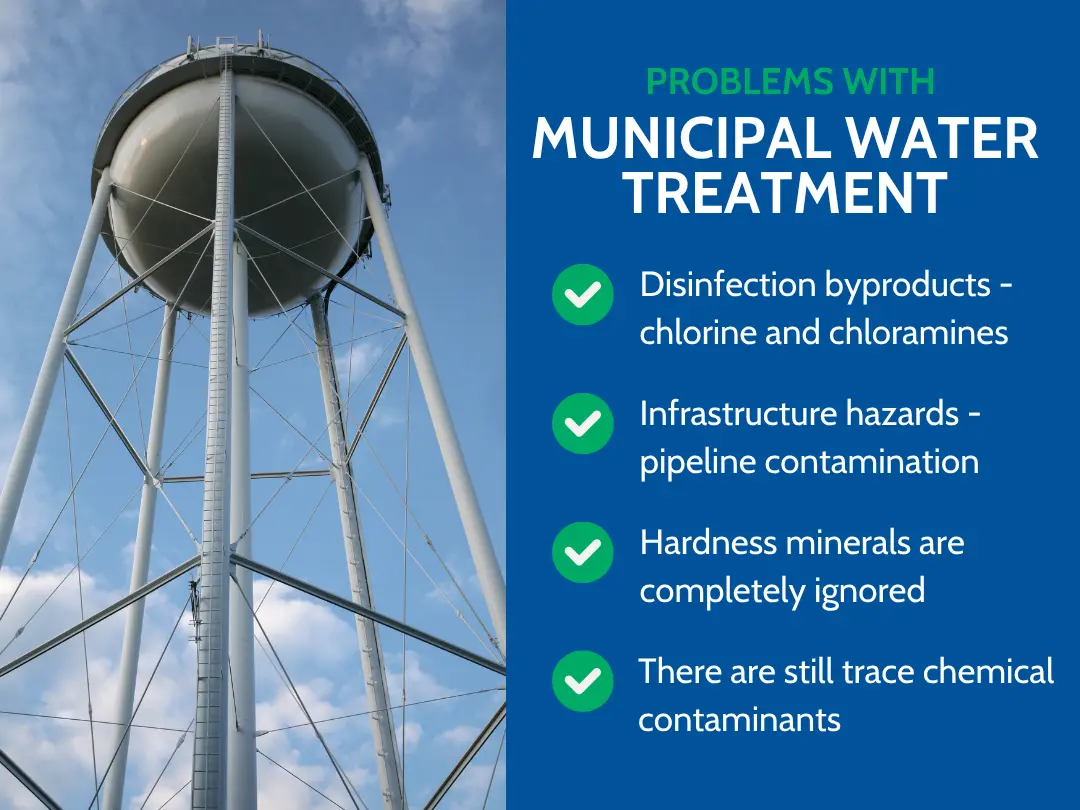
1. The Disinfection Byproduct Dilemma: Chlorine and Chloramines
To keep water free of bacteria as it travels through miles of underground pipes, cities inject chlorine or chloramines (a mixture of chlorine and ammonia) into the water supply.
The Problem: While necessary for transit, you don’t want to consume or bathe in these chemicals. Chlorine dries out your skin and hair, ruins the taste of food and coffee, and releases a harsh, bleach-like odor.
Related article: The Health Effects of Chlorine in Drinking Water: Risks, Benefits, and How to Protect Your Health
2. The Infrastructure Hazard: Pipeline Contamination
Even if municipal water leaves the city facility perfectly clean, it has to travel through an aging infrastructure network to get to your home.
The Problem: Water can travel through miles of decades-old water mains and residential copper plumbing with lead-soldered joints. Along the way, it can pick up pipe sediment, rust particles, and traces of heavy metals like lead and copper.
3. Hardness Minerals are Completely Ignored
Municipal treatment plants do not soften water. Removing hard minerals like calcium and magnesium at a city scale is simply too expensive for utilities.
The Problem: As a result, the Wine Country area suffers from notoriously hard municipal water. This mineral-heavy water creates a chalky white scale buildup inside your water heater, clogs your showerheads, reduces appliance efficiency, and forces you to use more soap just to get a good lather.
4. Trace Chemical Contaminants
Modern municipal facilities are rarely equipped to filter out emerging contaminants at a molecular level. Trace amounts of nitrates from agricultural runoff, industrial chemicals, dissolved solids (TDS), and even microscopic residues from prescription drugs frequently pass right through standard municipal filters.
The Problem: If your home doesn’t have a dedicated water treatment system, your body becomes the filter—forcing your liver and kidneys to process these leftover impurities.
Comprehensive Solutions for Municipal Water from Rayne of the Wine Country
No matter what specific issues are hiding in your local tap water, we provide localized, high-performance home systems designed to intercept contaminants right where they enter your home.
Every system in our lineup is available for direct purchase to build home equity, or via an affordable monthly lease where we handle all maintenance, filter changes, and repairs for you.
1. Whole-House Chlorine Removal Systems
If your main complaint is water that smells and tastes like a swimming pool, a dedicated chlorine removal system is the solution.
How it helps: These systems use specialized, high-grade carbon media to strip chlorine and chloramines out of your water supply when it enters your home’s water line. You’ll instantly notice cleaner-tasting drinking water, fresher laundry, and a significant difference in how hydrated your skin and hair feel after a shower.
2. Advanced Residential Water Softeners
To protect your plumbing infrastructure and eliminate stubborn white scale buildup, a whole-home water softener is essential.
How it helps: By utilizing advanced ion-exchange technology, our softeners swap out harsh calcium and magnesium ions for mild sodium or potassium ions. Soft water extends the lifespan of your water-using appliances, keeps your glass shower doors crystal clear, and can save an average family of four over $1,000 per year in energy, appliance wear, and detergent costs.
3. Eco-Friendly Salt-Free Water Conditioners
For homeowners looking for an environmentally conscious alternative to traditional salt-based softeners, our salt-free conditioners offer a great alternative.
How it helps: Rather than removing the minerals, salt-free conditioners alter their chemical structure. This prevents the calcium and magnesium from binding to your pipes, heating elements, and fixtures as hard scale, protecting your home’s major appliances without producing any wastewater or requiring salt refills.
4. Reverse Osmosis (RO) Drinking Water Systems
When it comes to the water your family actually drinks and cooks with, you want the highest level of purification available. Our under-sink multi-stage Reverse Osmosis systems deliver exactly that.
How it helps: Systems like the Rayne Pure Plus force water through a semi-permeable membrane, effectively reducing 95% to 97% of Total Dissolved Solids (TDS). It acts as an ultra-fine barrier that filters out microscopic threats that municipal water treatment plants miss, including lead, nitrates, arsenic, sodium, and pharmaceuticals. Then, you’re left with safe, great-tasting water right from your kitchen tap.
Don’t Guess What’s in Your Municipal Water or Private Well Water—Get It Tested For Free!
Because water quality changes from neighborhood to neighborhood across Solano, Sonoma, Napa, Mendocino, and Lake counties, a one-size-fits-all approach won’t work. The best way to secure peace of mind is to find out exactly what is coming out of your specific tap.
The water specialists here at Rayne of the Wine Country have decades of local experience analyzing regional water grids. We provide a free in-home water test to check your water hardness, chlorine levels, and dissolved solids. Once we know your exact water profile, we will help you build a tailored system that guarantees clean, safe water for your household.
Ready to upgrade your home’s water quality? Contact us today to book your free water analysis or to learn more about our full suite of water treatment solutions!