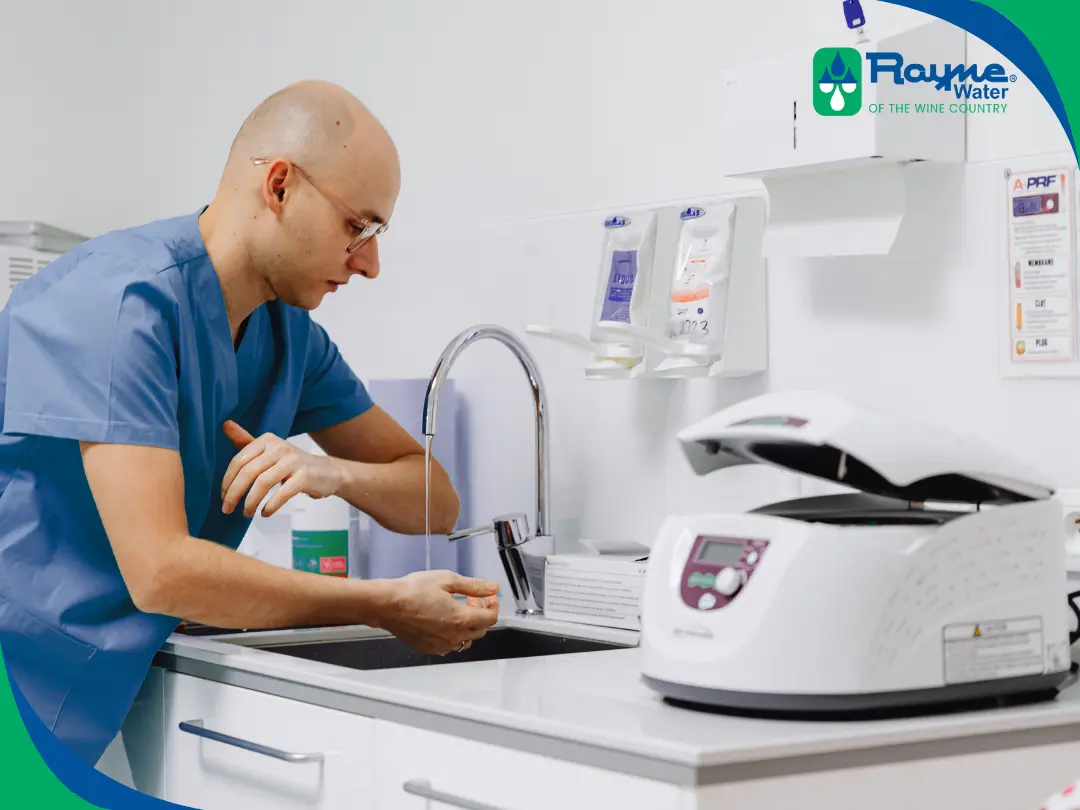
In medical facilities—including outpatient clinics, dental practices, and specialized surgical centers—water quality directly impacts patient safety, infection control, and equipment performance.
While municipal and private water supplies in California’s Wine Country are treated to standard baseline specifications, biological contaminants such as E. coli, total coliform bacteria, and resilient waterborne viruses can still threaten healthcare operations.
For decades, traditional chemical treatment (such as chlorination) was the standard protocol for water disinfection. However, healthcare standards have evolved. Today, facility managers are increasingly comparing UV sterilization vs. chemical disinfection for medical facilities to eliminate biological threats without introducing harmful chemical odors, toxic byproducts, or corrosive residues.
The Biological Threat: E. coli, Coliform, and Viruses
Healthcare professionals provide care for vulnerable, immunocompromised patients daily. In these sensitive medical settings, waterborne pathogens pose severe health risks:
- E. coli and Total Coliform Bacteria: Exposure in clinical settings can lead to severe gastrointestinal illness, surgical site contamination, or systemic infections.
- Enteric and Respiratory Viruses: Microscopic pathogens like norovirus and adenovirus are notoriously resistant to mild chemical washes and can persist in water lines, presenting infection risks during clinical procedures or device cleaning.
Addressing these contaminants requires a treatment method that inactivates pathogens instantly at high flow rates without altering the chemical makeup of the water.
How Commercial UV Water Sterilization Works
Ultraviolet (UV) water purification is a physical, non-chemical disinfection process. Water flows through a specialized stainless-steel chamber housing high-output germicidal UV lamps.
When biological contaminants pass through the chamber, UV-C light (specifically at a wavelength of 254 nanometers) penetrates the cell walls of bacteria, viruses, and protozoa. This radiation disrupts their DNA and RNA molecular structures, rendering them incapable of reproducing or causing infection.
Because it relies on light energy rather than additives, UV purification accomplishes complete biological neutralization in milliseconds as water moves through your supply line.
Comparison: UV Sterilization vs. Chemical Disinfection
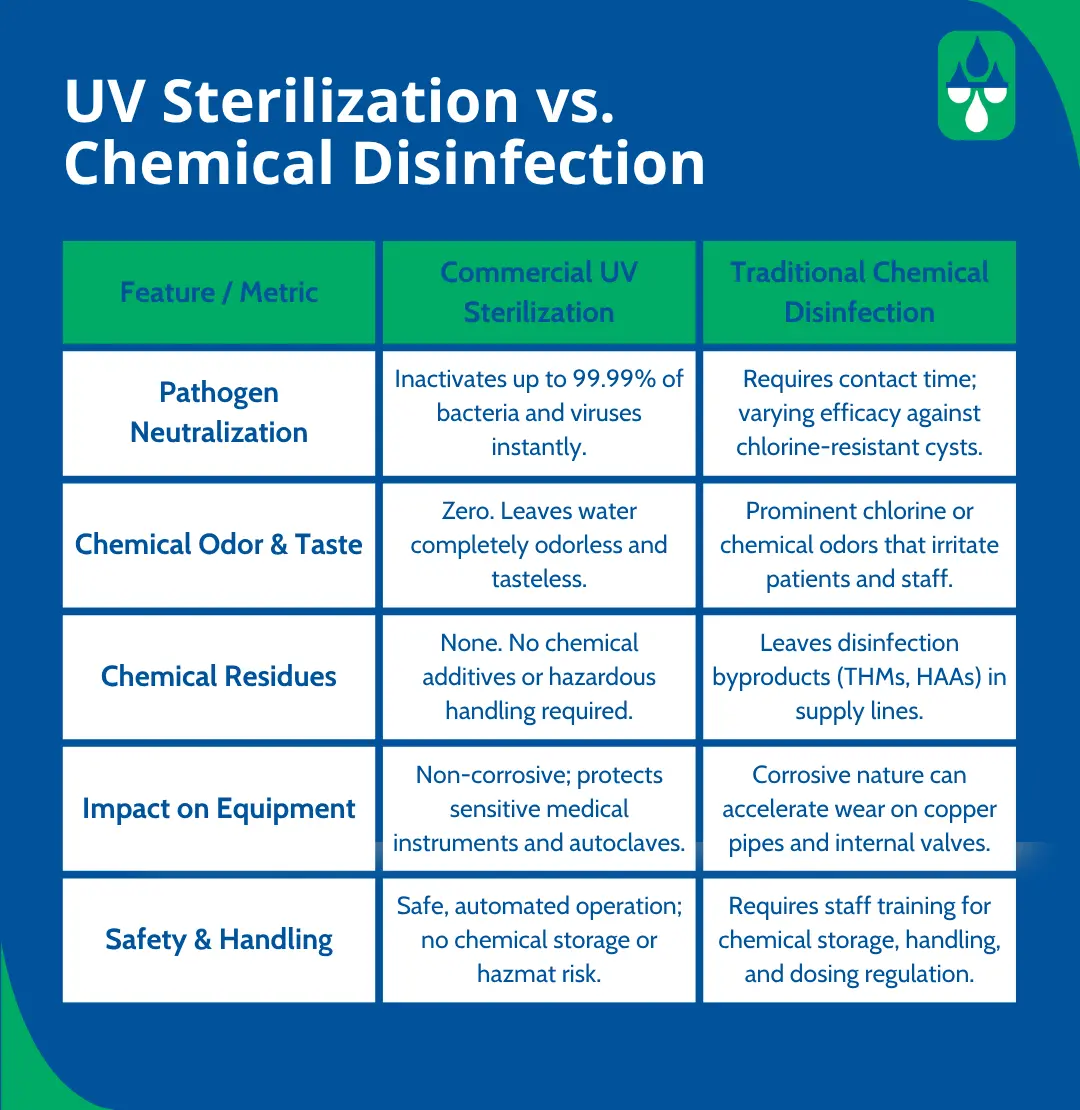
To understand why healthcare providers are making the switch to UV sterilization instead of chemical disinfection, it helps to compare both technologies side by side:
Key Benefits of UV Sterilization for Wine Country Medical Facilities
1. Eliminates Pathogens Without Chemical Odors or Taste
Patients in clinical settings are often sensitive to sensory triggers. Strong chemical or chlorine odors can cause discomfort or anxiety. Commercial UV systems disinfect water at the point of entry or point of use without leaving behind any medicinal smell or residual taste.
2. Protects Sensitive Medical and Dental Equipment
Dialysis equipment, dental delivery units, endoscope washers, and steam sterilizers require pristine water. Chemical disinfection can leave behind corrosive residues or disinfection byproducts (DBPs) that pit metals, degrade rubber seals, and scale internal heating elements. UV sterilization delivers pure water that extends the life of costly healthcare machinery.
3. Continuous, Automated Protection
Unlike chemical dosing pumps—which require constant monitoring, re-stocking of liquid agents, and precise dosing calibrations—commercial UV systems run continuously with low maintenance overhead.
4. Eco-Friendly and Compliant with Local Standards
California’s Wine Country places a high premium on environmental stewardship and sustainable operations. UV sterilization is an eco-friendly water treatment method that produces no hazardous chemical waste discharge into local wastewater streams or septic networks.
Advanced UV Sterilization Solutions from Rayne of the Wine Country
Installing a commercial-grade UV purification system in a healthcare environment requires professional engineering and precise flow-rate matching.
At Rayne of the Wine Country, we provide heavy-duty Commercial UV Sterilization and Purification systems tailored specifically to the regional water profiles of Napa, Sonoma, Lake, Mendocino, and Solano Counties.
Frequently Asked Questions (FAQ) About UV Sterilization vs Chemical Disinfection
Does UV sterilization alter the mineral content or pH of water?
No. UV sterilization is a physical process, not a chemical one. It neutralizes living organisms without adding or removing dissolved minerals, changing the pH, or altering water chemistry.
Can a UV system handle high water volume for a multi-story clinic?
Yes. At Rayne of the Wine Country, we can engineer high-flow commercial UV units capable of treating hundreds of gallons per minute (GPM), ensuring uninterrupted supply even during peak facility usage hours.
How often do commercial UV lamps need to be replaced?
Commercial UV lamps typically maintain effective germicidal output for approximately 9,000 hours of continuous use (roughly 1 year). Annual service schedules ensure your system remains within medical compliance standards.
Partner with the Water Treatment Experts at Rayne of the Wine Country
Ensuring your facility’s water is free from E. coli, coliform, and viruses does not require compromising on air quality, patient comfort, or equipment integrity.
Whether you operate a private clinic, a surgical site, or a specialized therapy center in the Wine Country, our team brings decades of commercial water treatment expertise to your project. Simply contact us today to explore your options and to learn more from our water treatment experts.