The short answer to this question is NO. A reverse osmosis (RO) system does not function as a whole-home water softener.
While reverse osmosis removes many contaminants, including some dissolved minerals, it is not designed to treat hard water throughout your entire home. If you’re dealing with scale buildup, dry skin, spotty dishes, or appliance damage, a dedicated water softener is typically the right solution.
To understand why, let’s break it down clearly.
What Is Reverse Osmosis?
A reverse osmosis system is a water filtration system that pushes water through a semi-permeable membrane to remove impurities.
RO systems are most commonly installed:
- Under the kitchen sink
- At a single drinking water tap
- For point-of-use drinking water treatment
What Reverse Osmosis Removes:
- Dissolved solids (TDS)
- Lead
- Arsenic
- Nitrates
- Chlorine (with pre-filters)
- Certain bacteria and contaminants
- Some hardness minerals (calcium and magnesium)
Because RO removes some calcium and magnesium, many people assume it “softens” water. However, this only happens at the single tap where the RO system is installed — not throughout your home.
What Is a Water Softener?
A water softener is a whole-home water treatment system specifically designed to remove hardness minerals like:
- Calcium
- Magnesium
These minerals are responsible for:
- Scale buildup in pipes
- White spots on dishes
- Reduced appliance efficiency
- Soap scum
- Dry skin and hair
Related article: Spotting the Signs of Hard Water: What Every California Homeowner Needs to Know
Water softeners use an ion exchange process to replace hardness minerals with sodium or potassium, effectively preventing scale formation throughout your entire plumbing system.
Reverse Osmosis vs. Water Softener: What’s the Difference?
As the old saying goes, “a picture is worth a thousand words.” Take a look at this image and it’s easy to spot the main differences between these two systems.

Key Takeaways:
- RO improves drinking water quality.
- Water softeners treat hard water for your entire home.
In fact, many homes benefit from having both systems working together.
When Should You Choose a Reverse Osmosis System for Your Home?
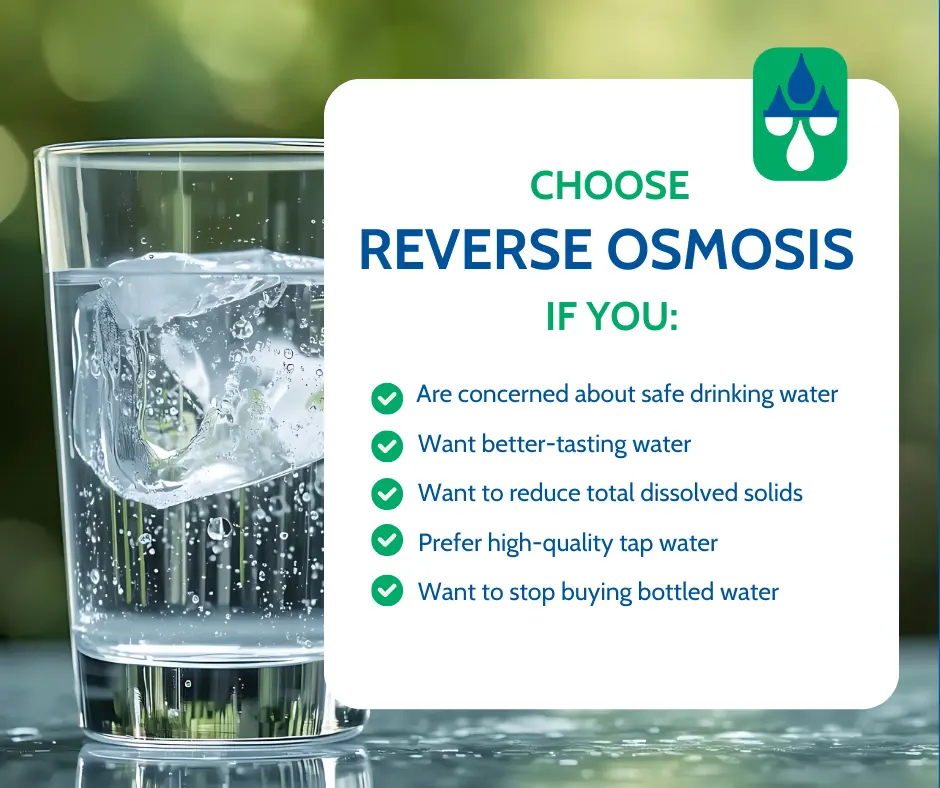
A reverse osmosis system is ideal if:
- You’re concerned about drinking water contaminants
- You want better-tasting water
- You want to reduce total dissolved solids (TDS)
- You prefer high-quality water from your tap
- You want to stop buying bottled water
RO is about clean, safe drinking water — not plumbing protection.
When Should You Choose a Water Softener for Your Home?
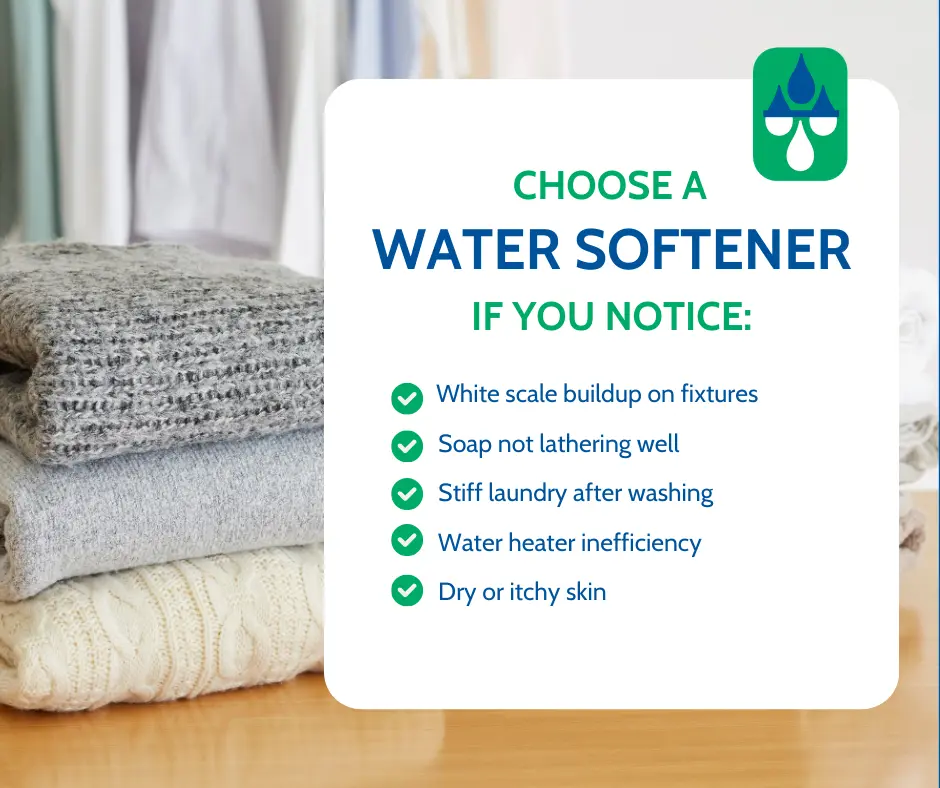
A water softener is the right solution if you notice:
- White scale buildup on fixtures
- Soap not lathering well
- Stiff laundry
- Water heater inefficiency
- Dry or itchy skin
Hard water is extremely common in Northern California. A properly sized water softener can extend appliance life, improve efficiency, and reduce maintenance costs.
Do You Ever Need a Reverse Osmosis System AND a Water Softener?
Yes — and in many homes, this is the best setup.
A common and effective combination is:
- Whole-home water softener to remove hardness minerals
- Under-the-sink reverse osmosis system for filtered drinking water
This provides complete protection and performance — from your water heater to your drinking glass.
Why Proper Water Testing Can Help You Decide Between Reverse Osmosis and a Water Softener
Choosing between reverse osmosis and a water softener shouldn’t be guesswork.
Water quality varies significantly depending on:
- Municipal supply differences
- Private well water
- Mineral content
- Contaminant levels
Professional water testing helps determine:
- Your water’s specific hardness level (measured in grains per gallon)
- Total dissolved solids
- Specific contaminants present
Without testing, you could install the wrong water treatment system — or miss an important water quality issue.
How Rayne of the Wine Country Can Help You Find the Best Water Treatment Solution for Your California Home
At Rayne of the Wine Country, we specialize in customized water treatment solutions for homes and businesses throughout Northern California.
Our local water treatment experts will:
- Test your water
- Evaluate your household water usage
- Identify water hardness and contaminant levels
- Recommend the right water treatment system (or combination of systems)
- Professionally install and service your equipment
Whether you need a water softener, reverse osmosis system, or both, we help you make a confident, informed decision based on your specific water quality needs.
Final Answer: Does Reverse Osmosis Soften Water?
Reverse osmosis can remove some hardness minerals at a single tap, but it does not replace a whole-home water softener.
If your goal is:
- Protecting plumbing
- Preventing scale
- Improving appliance lifespan
You need a water softener.
If your goal is:
- Cleaner drinking water
- Better tasting drinking water
- Reduced contaminants
You need reverse osmosis.
And in many cases, the best solution is a properly designed combination of both systems.
If you’re unsure which water treatment system is right for your home, contact us at Rayne of the Wine Country for professional water testing and personalized recommendations. Clean, high-quality water starts with the right solution!