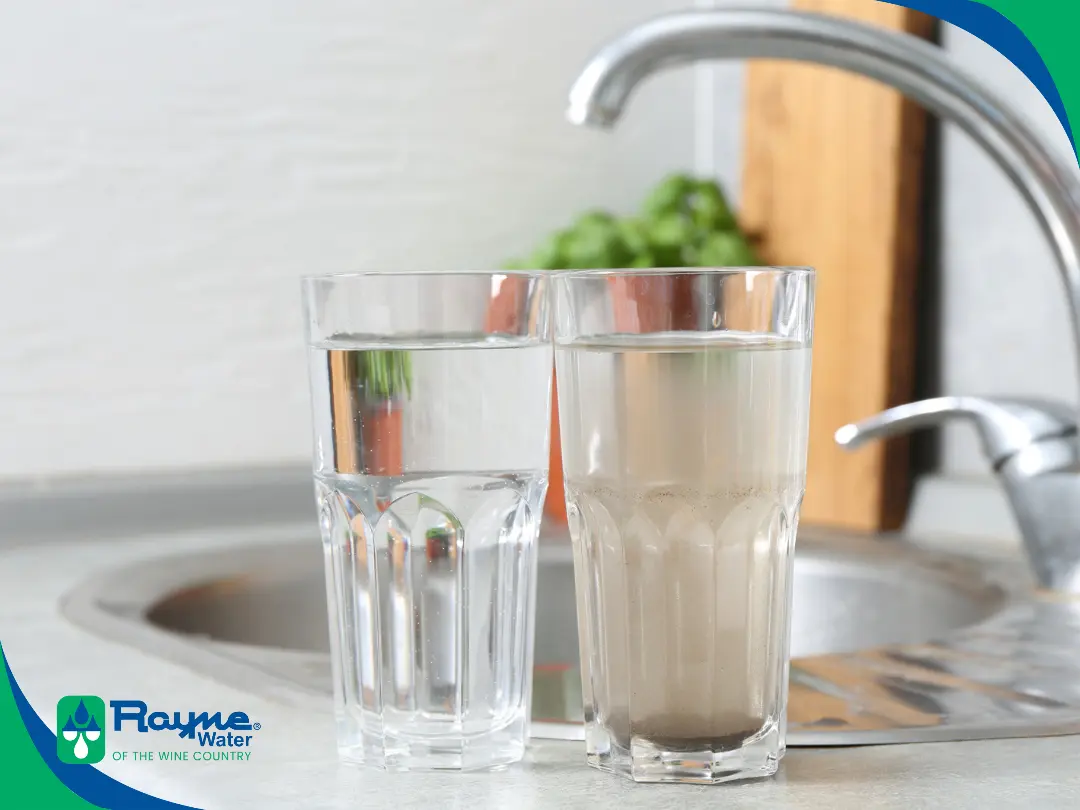
When you turn on your kitchen faucet, you expect the water to be clean, refreshing, and safe to drink. But what if your tap water has an unpleasant taste, a noticeable chlorine smell, or contaminants you’d rather not have in your drinking water?
Two popular solutions are reverse osmosis (RO) systems and carbon water filters. Both can improve water quality, but they use different filtration methods and address different concerns.
If you’re comparing reverse osmosis vs carbon filter systems for your home, understanding these differences can help you choose the right solution.
For homeowners in California’s Wine Country, where drinking water may come from municipal supplies or private wells, selecting an appropriate filtration system can be especially important.
In this guide, we’ll explain how reverse osmosis and carbon filtration work, compare their benefits and limitations, and help you determine which drinking water solution makes sense for your household.
What Is the Difference Between Reverse Osmosis and Carbon Filtration?
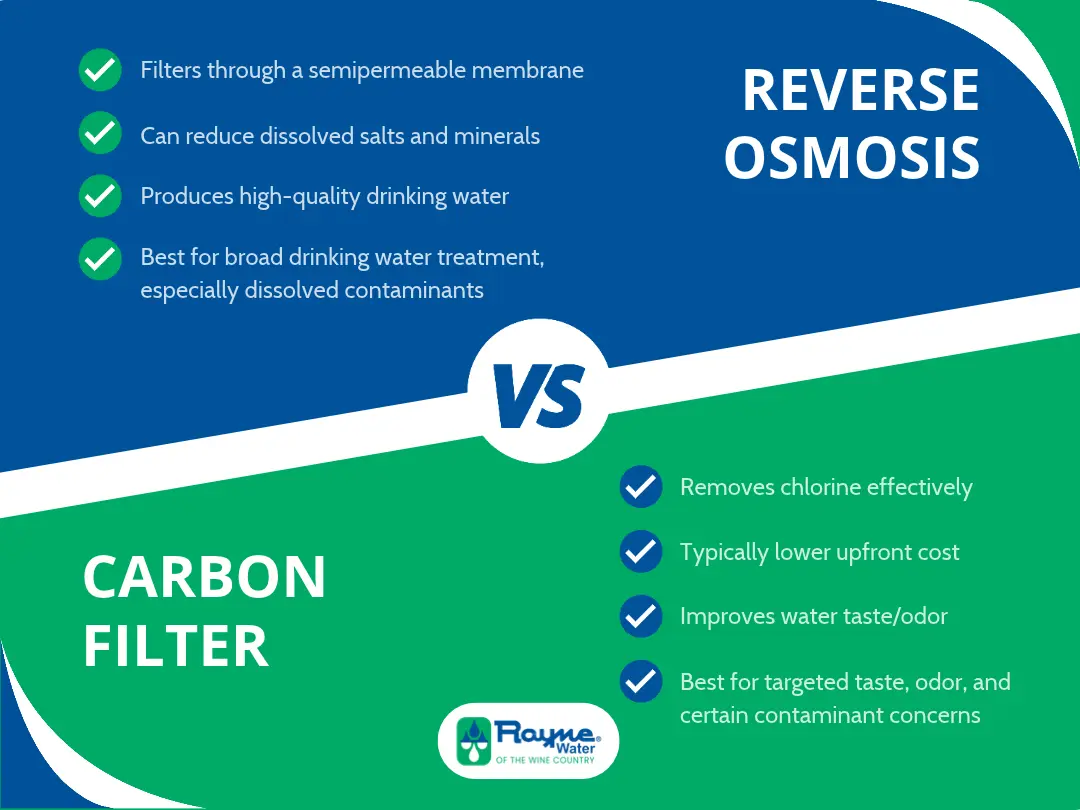
The biggest difference between reverse osmosis and carbon filtration is how they treat water and which substances they can reduce.
- Carbon filters primarily use adsorption to capture certain contaminants, particularly chlorine and compounds that affect water’s taste and odor.
- Reverse osmosis systems use a semipermeable membrane to separate water from many dissolved substances, including certain salts, metals, and other contaminants.
Many reverse osmosis drinking water systems also contain carbon filters, combining both technologies to provide more comprehensive treatment.
Important: Not every carbon filter or reverse osmosis system removes the same contaminants. Actual performance depends on the specific product, its certification, water chemistry, proper installation, and maintenance.
How Does a Carbon Water Filter Work?
A carbon water filter uses activated carbon, a highly porous material that attracts and holds certain substances as water passes through it.
This process, called adsorption, can help reduce unwanted chemicals and improve the taste and smell of drinking water.
Carbon filtration is commonly found in:
- Refrigerator water filters
- Faucet-mounted filters
- Countertop water pitchers
- Under-sink drinking water systems
- Whole-house filtration systems
What Does a Carbon Filter Remove From Drinking Water?
Depending on its design and certification, a carbon water filter may reduce:
- Chlorine
- Unpleasant tastes and odors
- Certain volatile organic compounds (VOCs)
- Some pesticides and organic chemicals
- Lead, in specifically certified products
- Certain PFAS chemicals, in specifically certified products
Carbon filters are particularly useful when a homeowner’s primary concern is the chlorine taste or smell associated with treated municipal water.
What Doesn’t a Carbon Filter Remove?
Standard activated carbon filters generally do not effectively reduce:
- Dissolved salts
- Water hardness minerals, such as calcium and magnesium
- Nitrates
- Arsenic
- Many other dissolved inorganic contaminants
Some specialized carbon-based products incorporate additional filtration media or technologies that expand their capabilities. That’s why checking the actual product specifications matters.
Bottom line: A carbon water filter may be an excellent choice if your drinking water is otherwise suitable and you’re primarily concerned about taste, odor, or a specific contaminant the filter is certified to reduce.
However, if your water contains elevated dissolved solids or certain inorganic contaminants, carbon filtration alone may not provide the treatment you need.
How Does a Reverse Osmosis Drinking Water System Work?
Reverse osmosis is a more comprehensive filtration process that uses pressure to push water through a semipermeable membrane.
The membrane allows water to pass through while rejecting many dissolved substances.
A typical residential reverse osmosis system uses several treatment stages:
- Sediment prefilter: Helps capture particles such as dirt, sand, and rust.
- Carbon prefilter: Helps reduce chlorine and certain chemicals that could affect water quality or damage the membrane.
- Reverse osmosis membrane: Reduces many dissolved substances, including certain metals, salts, and other contaminants.
- Carbon postfilter: Helps polish the water’s final taste and odor.
Some systems include additional treatment stages or specialized features.
What Does Reverse Osmosis Remove From Water?
Depending on the system and its certification, reverse osmosis can reduce a broad range of contaminants, including:
- Dissolved salts and total dissolved solids (TDS)
- Lead
- Arsenic
- Nitrates and nitrites
- Fluoride
- Certain PFAS chemicals
- Some other dissolved metals and inorganic substances
RO systems can also reduce certain microorganisms under appropriate conditions, but standard residential drinking water RO systems should not automatically be considered suitable for microbiologically unsafe water.
For homeowners concerned about several types of contaminants rather than just taste and odor, reverse osmosis may offer a more comprehensive solution.
Note: Reverse osmosis does not guarantee that water is free of every contaminant. Reduction capabilities vary by system, and specific claims should be verified through independent testing and certification.
Reverse Osmosis vs. Carbon Filter: Which Removes More Contaminants?
When comparing reverse osmosis vs carbon filtration, one of the most important considerations is the type of contamination you’re trying to address.
1. Chlorine and Unpleasant Tastes
Carbon filtration is often sufficient.
Activated carbon is particularly effective at reducing chlorine taste and odor.
Because many RO systems include carbon filtration stages, they can also improve chlorine-related taste and odor concerns.
If chlorine is your only concern, a certified carbon filter may be the simpler, more economical solution.
2. Lead and Other Metals
Both technologies may work, depending on certification.
Certain carbon filters are specifically designed and certified to reduce lead.
Reverse osmosis systems can also reduce lead and other dissolved metals when properly designed and certified.
If lead is a concern, look for an explicit lead-reduction claim rather than assuming that any carbon or RO system will provide adequate protection.
3. Nitrates and Dissolved Salts
Reverse osmosis generally has the advantage.
Standard carbon filtration does not effectively remove nitrates or dissolved salts.
Properly selected reverse osmosis systems can reduce these substances.
This distinction can be particularly relevant for households using private well water in agricultural regions.
4. PFAS, Sometimes Called Forever Chemicals
Both technologies may reduce certain PFAS, but performance varies.
Some activated carbon filters and reverse osmosis systems have been independently certified to reduce specific PFAS compounds.
However, no homeowner should assume that a filter removes every PFAS chemical.
Look for current certification and contaminant-specific performance claims, including applicable NSF/ANSI 53 or NSF/ANSI 58 claims.
5. Hardness Minerals
Reverse osmosis can reduce dissolved hardness minerals in drinking water.
Carbon filters generally do not remove calcium and magnesium.
However, a point-of-use RO system is not a substitute for a whole-house water softener.
If hard water is causing scale buildup in showers, plumbing fixtures, and appliances, a whole-house water softening solution may be more appropriate.
Many homeowners benefit from having a water softener for household water and a separate reverse osmosis system for drinking and cooking.
Which Water Filter Makes Drinking Water Taste Better?
Both reverse osmosis and carbon filtration can improve drinking water taste, but the results depend on what’s causing the unpleasant flavor.
When Carbon Filtration May Be Enough
If your water tastes or smells like chlorine, a carbon filter may provide a noticeable improvement.
Carbon filters can also reduce certain organic compounds responsible for unwanted flavors.
When Reverse Osmosis May Be Better
If your drinking water has an unpleasant mineral, salty, or otherwise dissolved-solids-related taste, reverse osmosis may be more effective.
Because RO systems can reduce dissolved minerals and salts, the resulting water often has a lighter, cleaner taste.
Many homeowners also prefer RO-treated water for:
- Coffee and tea
- Cooking and preparing soups
- Making ice cubes
- Filling reusable water bottles
- Preparing beverages
Taste preferences are subjective, however. Some people prefer water containing more naturally occurring minerals.
The best-tasting water is the water that meets your household’s preferences while also addressing its actual water quality concerns.
Why Wine Country Homeowners May Want a Reverse Osmosis System
California’s Wine Country is known for its vineyards, agricultural heritage, and beautiful communities. But water quality can vary considerably depending on your property’s location and water source.
Homeowners in Sonoma County, Napa County, and surrounding Wine Country communities may have several reasons to consider reverse osmosis drinking water filtration.
1. Private Wells May Have Different Water Quality Concerns
Some Wine Country homes rely on private wells rather than municipal drinking water.
Unlike public water systems, private wells generally aren’t subject to the same routine regulatory monitoring requirements.
Depending on local geology, surrounding land use, and well conditions, private well water may contain elevated levels of naturally occurring or human-influenced contaminants.
Potential concerns can include nitrates, arsenic, dissolved minerals, and other substances.
An appropriately selected RO system may help address certain dissolved contaminants, but the first step should always be professional water testing.
2. Agricultural Land Use Can Influence Groundwater Quality
Vineyards and other agricultural activities are an important part of the Wine Country economy.
In some agricultural areas, groundwater can be affected by fertilizers, land-use practices, and other sources of contamination.
Nitrate is one potential concern, particularly for private wells.
Because standard carbon filters don’t effectively reduce nitrates, a certified reverse osmosis system may be worth considering when testing identifies elevated nitrate concentrations.
Not every agricultural property or well has this problem, however, so testing is essential.
3. Some Water Supplies Have High Mineral Content
Depending on the water source, homeowners may notice mineral-related taste issues or scale deposits.
Reverse osmosis can reduce many dissolved minerals in water used for drinking and cooking.
However, if mineral buildup is occurring throughout the home, a whole-house water softener or another treatment solution may also be needed.
4. Municipal Water Can Still Have Taste and Odor Issues
Municipal drinking water is treated and monitored to meet applicable drinking water standards.
Even so, homeowners may dislike the taste or smell of disinfectants used in water treatment.
A carbon filter may adequately address those concerns.
For households seeking additional reduction of dissolved substances, reverse osmosis may offer broader treatment capabilities.
5. Homeowners May Want Greater Confidence in Their Drinking Water
Whether your water comes from a private well or municipal supply, it’s reasonable to want to understand what’s in it.
A reverse osmosis system can be part of a targeted drinking water treatment plan that addresses identified concerns.
The key is choosing a system based on actual water conditions rather than relying on broad claims about what all RO systems can remove.
Reverse Osmosis vs. Carbon Filter: Which Costs More?
Cost is another important consideration when comparing these drinking water filtration options.
Carbon Filter Costs
Basic carbon filters generally have lower upfront costs.
Pitcher, faucet-mounted, and some under-sink carbon systems are relatively inexpensive to purchase and install.
However, replacement cartridges can become a recurring expense, especially for systems with limited filter capacity.
Reverse Osmosis System Costs
Reverse osmosis systems typically require a higher initial investment because they contain additional components, including a membrane, multiple filters, and sometimes a storage tank or pump.
Professional installation may also be recommended.
Ongoing costs can include:
- Sediment and carbon prefilter replacements
- RO membrane replacement
- Periodic system inspection and maintenance
- Water used during the filtration process
- Electricity for systems equipped with pumps or other powered components
RO systems produce a concentrate stream containing rejected substances, which means they use more incoming water than they deliver as treated drinking water.
The amount varies significantly by system design, incoming water pressure, and operating conditions.
Some modern systems are designed to reduce water waste compared with older models.
Is Reverse Osmosis Worth the Additional Cost?
If you’re primarily concerned about chlorine taste, a carbon filter may provide the results you want at a lower cost.
However, if water testing identifies dissolved contaminants that carbon filtration cannot effectively address, investing in a properly certified RO system may be worthwhile.
The better value isn’t necessarily the least expensive system. It’s the system that reliably addresses your household’s water quality needs.
Which Requires More Maintenance: RO or Carbon Filtration?
Both systems require routine maintenance to remain effective.
Carbon Filter Maintenance
Carbon filters typically need periodic cartridge replacement.
Replacement frequency depends on the manufacturer’s recommendations, water quality, and the volume of water treated.
Using a carbon filter beyond its rated capacity can reduce its effectiveness.
Reverse Osmosis Maintenance
RO systems generally have more components to maintain.
Depending on the specific system, maintenance may include:
- Replacing sediment and carbon prefilters
- Replacing the RO membrane when necessary
- Checking storage tank performance
- Inspecting tubing and connections for leaks
- Sanitizing components according to manufacturer instructions
- Testing treated water to evaluate system performance
Some RO membranes last several years under suitable conditions, but their actual service life depends on feedwater quality, usage, pretreatment, and manufacturer specifications.
Regular maintenance is essential because even a high-quality reverse osmosis system can lose effectiveness when filters become clogged or components deteriorate.
Working with a professional water treatment provider can help ensure your system continues operating as intended.
How to Choose the Best Drinking Water Filter for Your Home
Before choosing between reverse osmosis and carbon filtration, consider the following questions.
What Is Actually in Your Water?
This is the most important question.
Water that tastes unpleasant isn’t necessarily unsafe, and contaminants that present health concerns may have no noticeable taste or odor.
If you use municipal water, review your water provider’s annual water quality report.
If you rely on a private well, consider professional water testing for contaminants relevant to your location and water source.
Related article: What Do Your Water Test Results Really Mean?
What Do You Want Your Water Filter to Accomplish?
A carbon filter may be appropriate if you primarily want to improve chlorine taste and odor.
A reverse osmosis system may be preferable if you’re concerned about multiple dissolved contaminants, mineral-related taste issues, or substances such as nitrates that standard carbon filters generally don’t remove.
Do You Need Point-of-Use or Whole-House Treatment?
A point-of-use drinking water system treats water at a particular location, usually the kitchen sink.
This may be sufficient if your primary concerns involve drinking and cooking water.
Whole-house treatment is more appropriate when water quality problems affect showers, laundry, appliances, or plumbing throughout the home.
In some cases, combining whole-house treatment with an RO drinking water system provides the most practical solution.
Related article: Whole House Filters vs. Point-of-Use Systems: Which Is Right for You?
Frequently Asked Questions About Reverse Osmosis vs. Carbon Filters
Is reverse osmosis better than a carbon water filter?
Reverse osmosis is generally better suited for reducing a broader range of dissolved contaminants, including certain salts, metals, and nitrates. Carbon filtration may be sufficient for chlorine taste, odor, and specific contaminants covered by the filter’s certification. The best option depends on your water quality and treatment goals.
Does a carbon filter remove the same contaminants as reverse osmosis?
No. Carbon filters and RO systems have different capabilities. Standard carbon filters primarily address chlorine, certain organic chemicals, and taste or odor concerns. RO systems can reduce many dissolved inorganic substances that carbon filters generally cannot remove.
Do reverse osmosis systems use carbon filters?
Yes, many residential reverse osmosis systems include carbon prefilters and postfilters. The carbon stages help improve taste and reduce certain chemicals, while the RO membrane targets many dissolved substances.
Can a carbon filter remove nitrates from well water?
Standard activated carbon filters generally do not effectively remove nitrates. Certain reverse osmosis systems are certified to reduce nitrates, making them a potential treatment option when testing identifies a nitrate problem. The system must be appropriately selected, installed, and maintained.
Does reverse osmosis remove healthy minerals from water?
Reverse osmosis reduces many dissolved minerals, including calcium and magnesium. Most people obtain the majority of their essential minerals through food rather than drinking water. Some RO systems include remineralization stages for homeowners who prefer mineral-enhanced water.
Does reverse osmosis waste water?
Yes. Reverse osmosis produces a concentrate stream that carries rejected substances away from the membrane. The amount of water used depends on the system’s design and operating conditions. Water-efficient models may reduce this amount.
Is reverse osmosis water safe to drink every day?
Water produced by a properly installed, appropriately certified, and maintained reverse osmosis system is generally suitable for everyday drinking when the system is matched to the source water. If the source is microbiologically unsafe, additional treatment may be necessary.
How often should I replace reverse osmosis filters?
Replacement schedules vary by manufacturer, filter type, water quality, and usage. Prefilters and postfilters often need replacement more frequently than the RO membrane. Follow the manufacturer’s maintenance instructions and monitor system performance.
Should I install a reverse osmosis system if I already have a water softener?
Possibly. Water softeners and RO systems serve different purposes. A softener primarily addresses hardness minerals throughout the home, while an RO system can reduce a broader range of dissolved substances in drinking and cooking water. They can work together as part of a comprehensive water treatment approach.
Do Wine Country homes need reverse osmosis water filtration?
Not every home needs an RO system. Water quality varies across California’s Wine Country, and municipal supplies and private wells can have different characteristics. Water testing and a review of the household’s concerns can help determine whether carbon filtration, reverse osmosis, or another solution is most appropriate.
Find the Right Drinking Water Solution With Rayne of the Wine Country
When comparing reverse osmosis vs carbon filter systems, there’s no single answer that works for every household.
For homeowners throughout California’s Wine Country, choosing the right system starts with understanding the water coming into the home.
At Rayne of the Wine Country, our water treatment professionals can help you evaluate your drinking water concerns and explore solutions that fit your household’s needs.
Whether you’re interested in improving the taste of your tap water, addressing specific contaminants, or upgrading an older drinking water filtration system, we’ll help you understand your options.
Ready to enjoy better-tasting drinking water at home?
Contact us today to learn more about reverse osmosis drinking water systems and find a water treatment that’s right for your Wine Country home.